Do we need to install new software?
No. Your team talks to the AI assistant you already use. The brain itself is a folder of plain text files. Some owners like to browse it in a free app like Obsidian, but that's optional.
AI knowledge systems
A second brain is a working memory for your business: the decisions, client history, processes, and lessons your team has already produced, organised in plain text so an AI can read it, keep it current, and put it to work.
We audit what you have, build the system, and keep it healthy month to month.
Book a discovery call · See the three ways to work
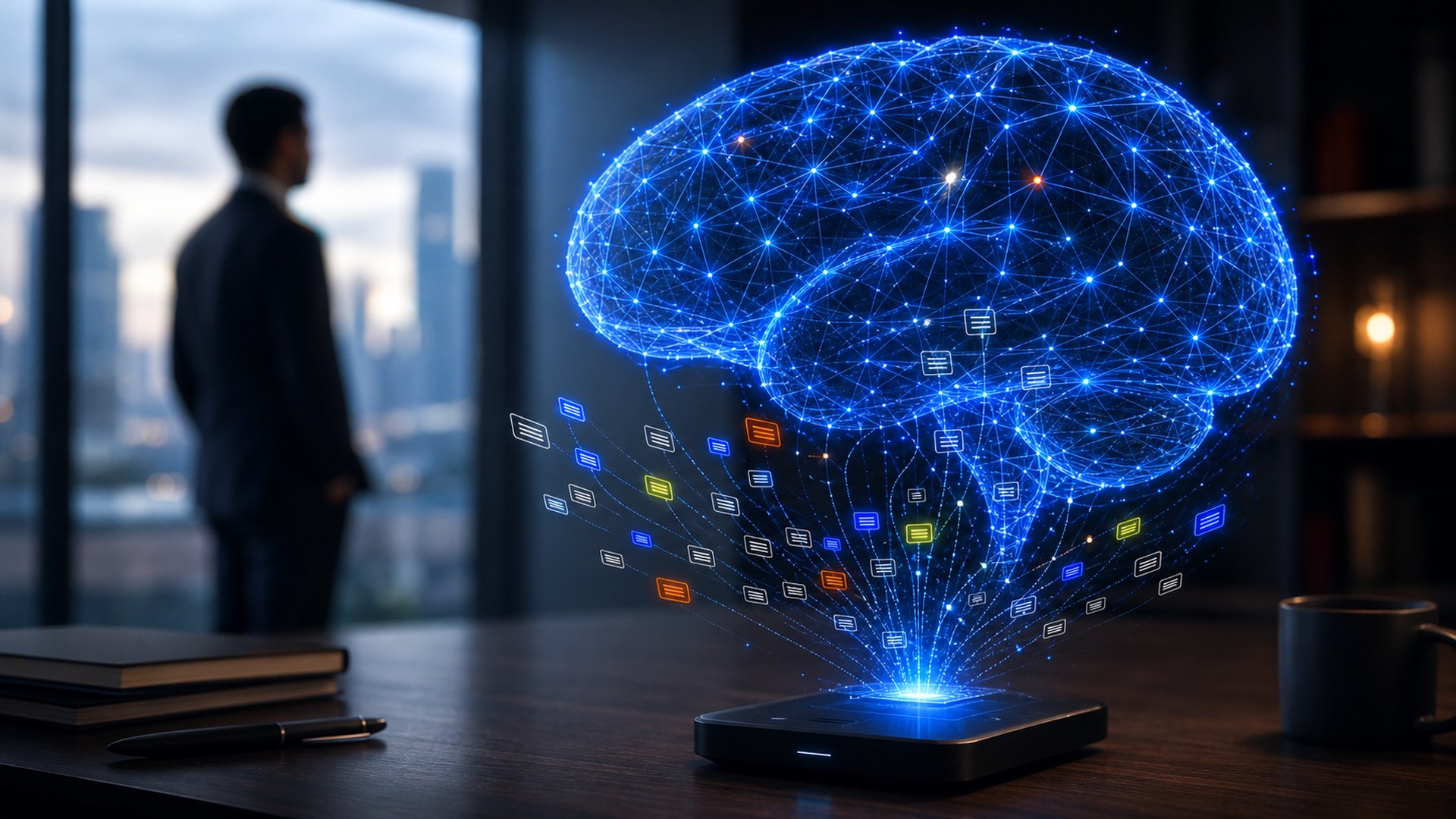
Ask an AI assistant about your own company and it usually knows less than a week-old intern. The AI isn't the problem. Your knowledge is scattered across inboxes, chat threads, old proposals, and a few people's heads, and none of it is in a form an AI can use.
A second brain collects that knowledge into one organised system. Every client's history. Every decision and the reasoning behind it, plus the processes someone currently has to re-explain to every new hire. Your AI reads it before doing any work for you, so the output sounds like your business rather than a generic assistant.
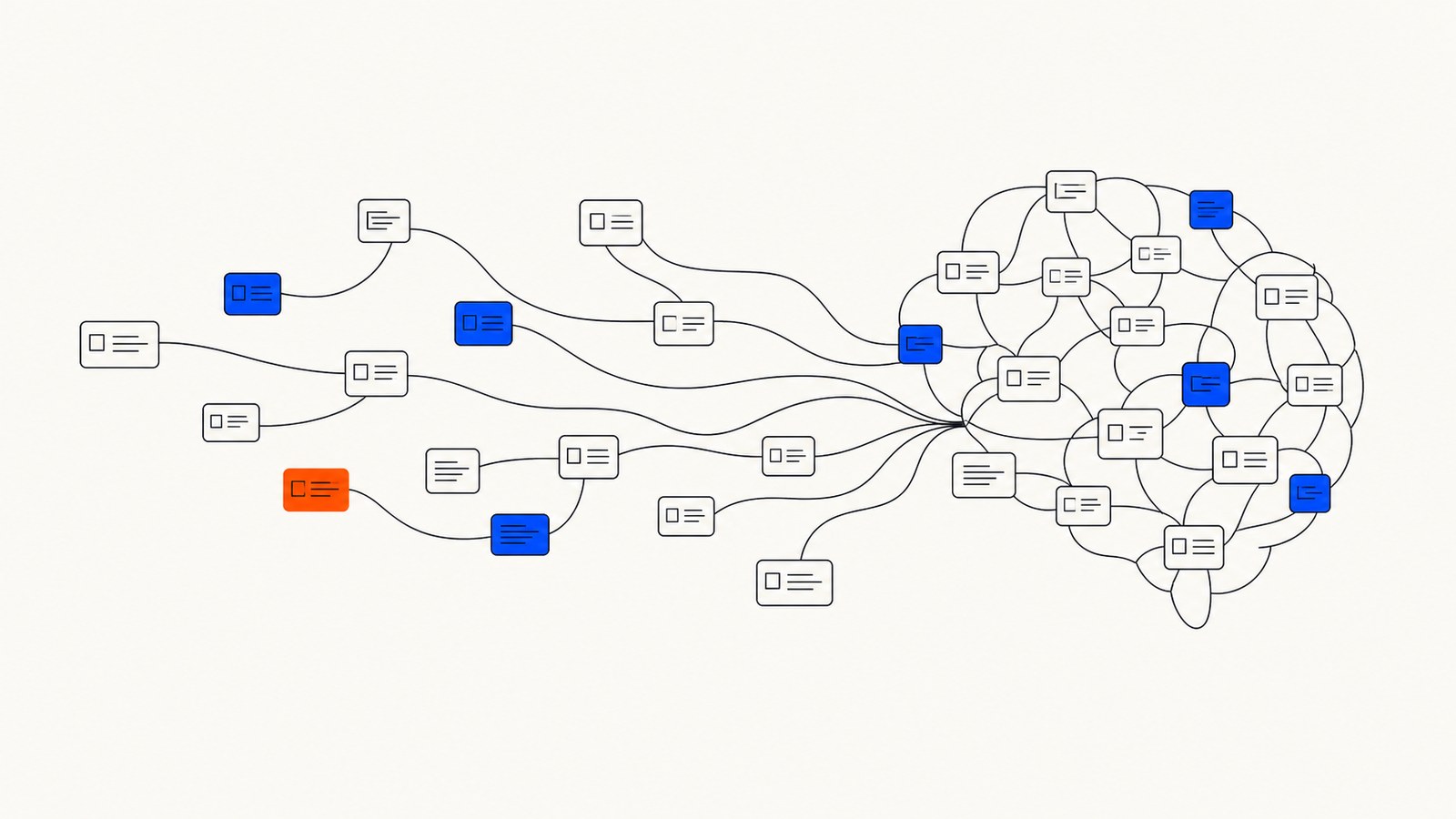
Marketing teams. You've run years of campaigns, and the evidence is sitting in old decks, ad accounts, and post-mortems nobody rereads. A second brain holds all of it: which hooks worked, which audiences went nowhere, what the last three launches actually taught you. When your AI drafts the next campaign, it starts from everything you've already paid to learn instead of starting from zero. And a new hire inherits that history on day one rather than in year two.
Legal and public affairs teams. Every position your firm has taken, every submission that landed, and the reasoning behind both. When a similar matter comes in, your AI surfaces what you argued last time and how it was received. The institutional memory stops living only in your most senior person's head.
Agencies and consultancies. Client preferences, banned words, commercial history, and every past round of feedback in one place your AI checks before any deliverable goes out. No client should ever have to give the same correction twice.
Owner-led businesses. If commercial logic, supplier quirks, and the way you handle difficult customers all live in your head, the business pauses whenever you do. A second brain is how it keeps running without you re-explaining everything.
Notion, Copilot, and Gemini all ship memory features now, and all of them come with the same fine print: the AI is only as good as what your team remembers to write down. The tools store knowledge. They don't go and get it, structure it, or keep it honest when things change. That's the gap we close.
This isn't a fringe idea. Singapore's Foreign Minister built himself one in 2026, a personal AI with persistent memory that he says can answer every question a diplomat needs. The same approach works for a business, and it works best when someone owns the upkeep.
Half a day. We map where your knowledge actually lives, what walks out the door when someone resigns, and what an AI could do with it today. You get a written report and a build recommendation, useful whether or not you continue with us.
About two weeks. We set up the brain: your company context, capture flows for the sources that matter (email, meetings, chat exports), and the first workflows your AI runs against it. Your team learns to use it before we hand over.
Knowledge systems decay. Prices change, staff move on, decisions get reversed. We run a monthly health check that catches contradictions, fills gaps, and reports what changed, so the brain stays something you can trust.
In your storage, not ours. For most teams that means a private GitHub repository or the cloud drive you already pay for. For regulated industries we build fully on premises with a local AI model, so nothing leaves your network. Either way, the whole system is plain text files you can open in any editor. If we disappeared tomorrow, your brain would still work.
Your team keeps the judgment. The AI captures, organises, and drafts. Your people decide. Every change to the brain goes through a review step, so company memory never changes silently. This matters more than it sounds. The failure mode of AI knowledge tools is confident nonsense nobody checked, and we design the checking in from day one.
No. Your team talks to the AI assistant you already use. The brain itself is a folder of plain text files. Some owners like to browse it in a free app like Obsidian, but that's optional.
No. Those stay where they are. The second brain is the layer your AI actually reads: structured, current, and small enough to stay trustworthy. It can pull from your existing tools rather than replace them.
ChatGPT starts every conversation from zero. A second brain gives your AI persistent context: who your clients are, how you price, what you decided last quarter and why. Same AI, very different output.
The audit takes half a day of your time. The pilot build runs about two weeks, and your team is using it from the first week.
You keep everything. The system is plain text in your own storage, with no subscriptions of ours attached. The monthly upkeep is what most clients keep us for, but the brain is yours either way.
No. We work on business AI plans with no-training terms, and for stricter environments we run a local model that never sends data out.
Book a discovery call. Or start smaller: the knowledge audit takes half a day and tells you exactly what an AI could do with what your business already knows.